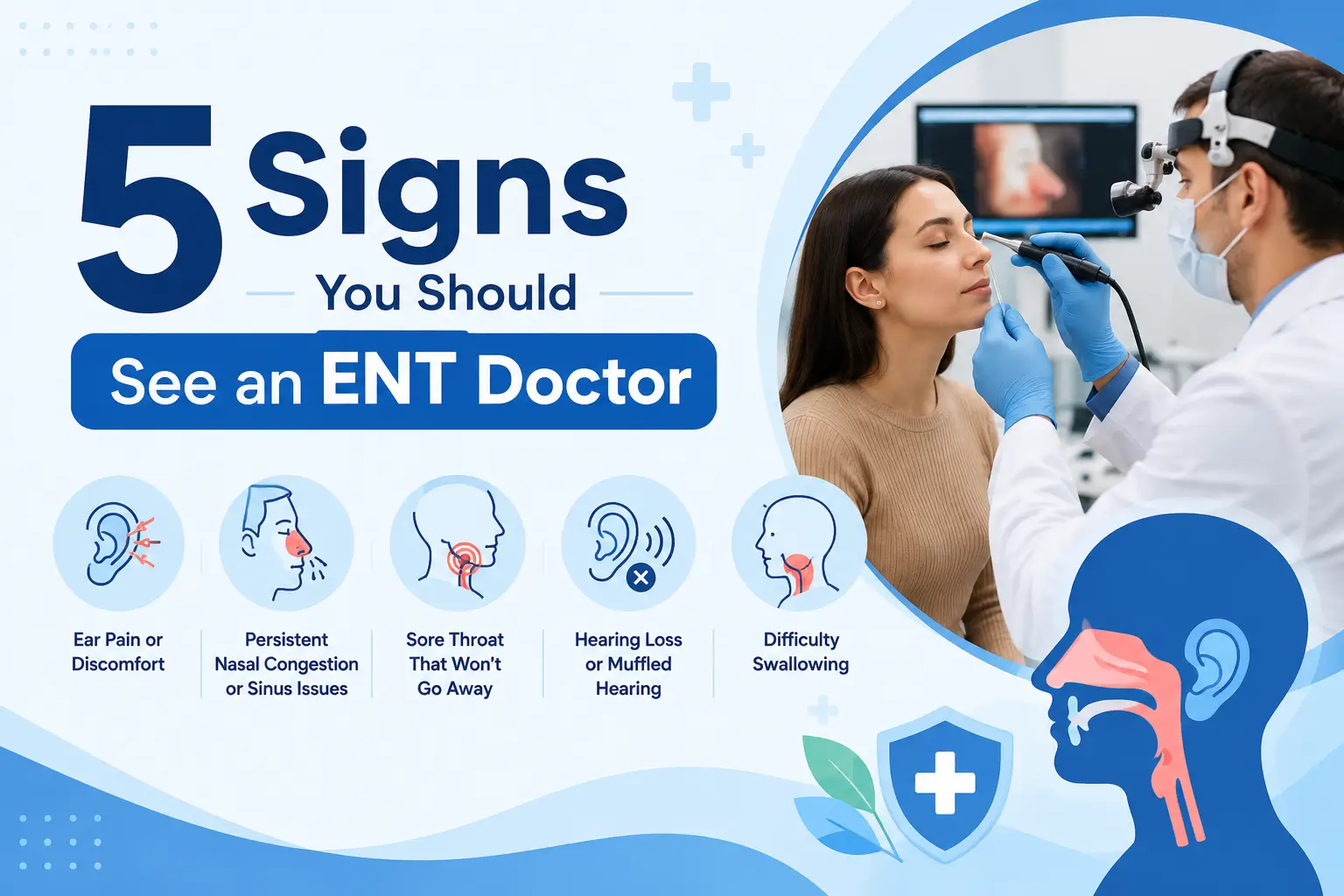

5 Warning Signs You Should Never Ignore About Your Ear Health
Your ears do more than just help you hear - they also help you maintain balance, and problems within them can affect your quality of life significantly. Many people delay seeking care for ear-related issues, assuming the symptoms will resolve on their own. However, certain warning signs should never be ignored.
1. Sudden Hearing Loss in One Ear
Sudden sensorineural hearing loss (SSHL) is a medical emergency. If you wake up one morning and notice that you can't hear clearly from one ear, or if hearing loss comes on rapidly over a few hours, seek care immediately. SSHL has the best treatment outcomes when addressed within the first 72 hours.
2. Persistent Ringing or Buzzing (Tinnitus)
Occasional tinnitus after a loud concert is normal. However, if you experience persistent ringing, buzzing, hissing, or clicking in your ears that doesn't go away, it could indicate an underlying condition such as noise-induced hearing damage, ear infections, or even cardiovascular issues. An ENT specialist can help identify the root cause.
3. Ear Discharge with Foul Odor
While a small amount of earwax is perfectly normal, any discharge that is yellow, green, bloody, or has a foul smell is a red flag. This could indicate a middle ear infection (otitis media), a perforated eardrum, or cholesteatoma - a serious but treatable condition where abnormal skin growth develops in the middle ear.
4. Dizziness and Balance Problems
The inner ear plays a critical role in balance. If you're experiencing episodes of vertigo (a spinning sensation), unsteadiness, or frequent falls, your inner ear could be to blame. Conditions like Benign Paroxysmal Positional Vertigo (BPPV), Meniere's disease, or labyrinthitis can cause these symptoms and require proper evaluation.
5. Ear Pain That Doesn't Resolve
Ear pain can stem from infections, temporomandibular joint (TMJ) disorders, or even dental problems. Persistent ear pain lasting more than 48-72 hours, especially if accompanied by fever or hearing changes, needs prompt medical attention to prevent complications.
When to See an ENT Specialist
If you experience any of the above symptoms, it's advisable to consult an ENT (Ear, Nose, and Throat) specialist rather than waiting. Early diagnosis leads to better outcomes and prevents long-term complications.
At 3 Senses Clinics, our ENT specialists are equipped with advanced diagnostic tools to evaluate your ear health comprehensively. Book a consultation today and take the first step towards better ear health.